

Kevin Dick
Posted on Oct. 1, 2026
What Is a 529 Plan?
A 529 plan is a tax-advantaged savings account that can be used for education expenses. Anyone can open one, but parents and grandparents usually establish them on behalf of a child or grandchild (the account’s beneficiary). There are two types of 529 plans: educations savings plans and prepaid tuition plans. However, savings plans are far more common. So, when someone at the cookout mentions their kid’s 529, they almost certainly mean a savings plan.
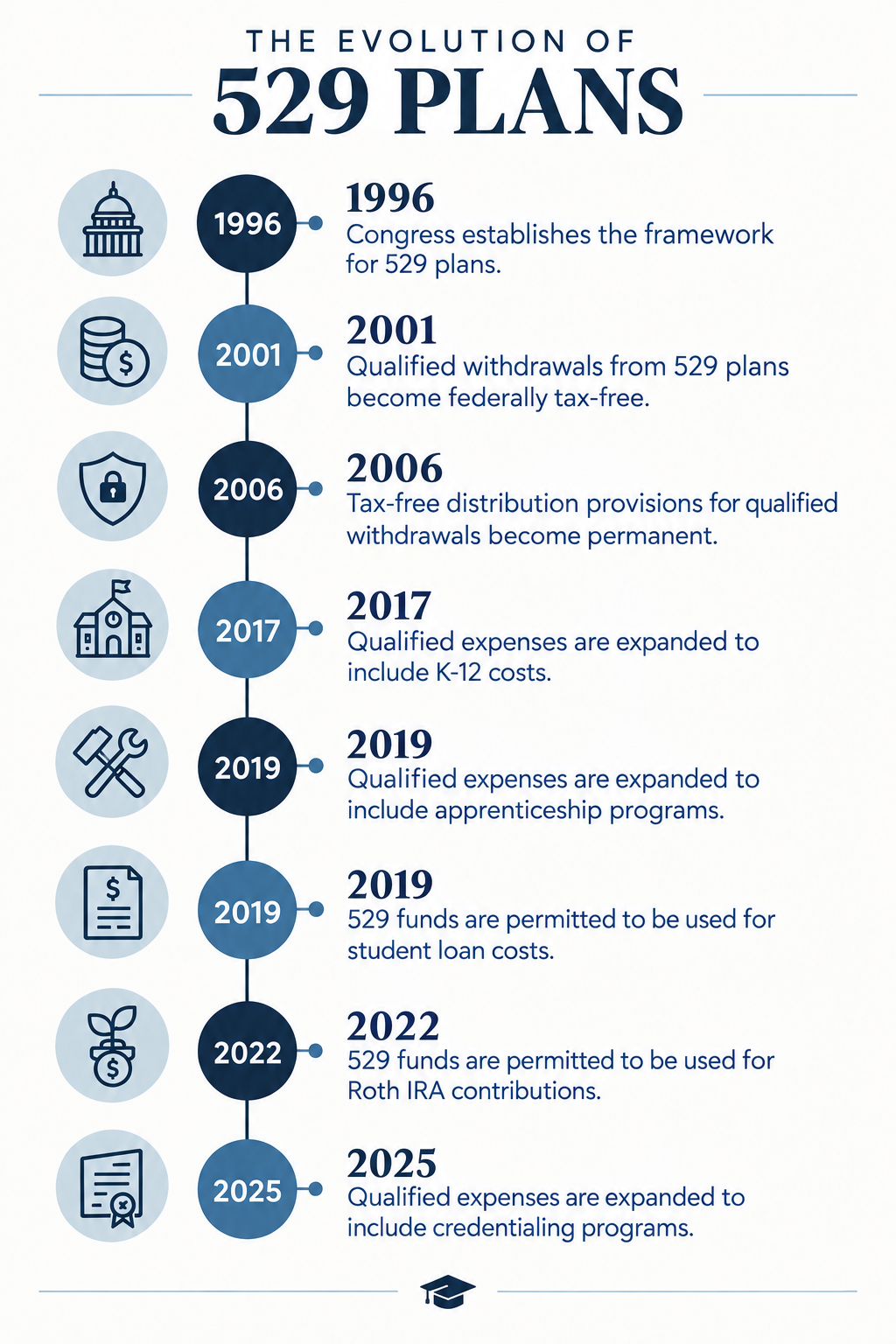
529s were originally designed to help pay for college, but their scope has expanded significantly over the past decade. Beyond college and trade school, 529s now cover K-12 costs, registered apprenticeships, credential programs, and even student loans. If money is still left over after all that, the owner can roll some of it into the beneficiary’s Roth IRA, within limits.
529 contributions are treated as gifts. There’s generally no annual limit to how much you can contribute to an account, although many people choose to stay below the annual gift tax exclusion of $19,000 per beneficiary ($38,000 for married couples). Contributions aren’t deductible on the federal level, but many states offer tax deductions or credits, which vary by state. Massachusetts, for example, allows a deduction of up to $1,000 per person ($2,000 for married couples filing jointly) New Hampshire, on the other hand, has no state income tax so it has no deduction to offer.
The money in a 529 grows tax-deferred, and withdrawals are completely tax-free as long they go toward qualified expenses. For college, qualified expenses include tuition, room and board, required books and school supplies, and even computers. If you take money out for anything else, like a down payment on a new car, then the earnings portion of that withdrawal is subject to income tax plus an additional 10% penalty.
It’s Not Just for College…
529s have changed a lot since they were first established, which means there are still plenty of misconceptions about them. The most common one is that they can only be used for college. In fact, they now cover education costs that come years before and after the typical college years.
- K-12 Expenses – 529s started covering K-12 tuition in 2017, up to $10,000 per beneficiary per year. Since then, that limit was doubled to $20,000 annually, and eligible costs now go beyond tuition to include tutoring, books, and standardized testing fees.
- Trade School – The rules for using 529 funds on trade school generally follow the same rules as for college.
- Registered Apprenticeships – There’s no annual limit on qualified apprenticeship expenses, provided the program is registered with the Department of Labor or an agency it recognizes. Many unions and employer training programs are registered, and you can check your program’s status here.
- Credential Programs – Common examples include CDLs, IT certifications, certified nursing assistant training, and other licensing prep programs. On top of tuition, books, and supplies, a 529 can also pay for testing fees and continuing education. Each state has its own approved list of programs and providers that qualify.
- Student Loans – 529 money can repay the beneficiary’s federal or private student loans, up to $10,000 over their lifetime. It can also repay a sibling’s loans without having to change the beneficiary, and each sibling gets their own separate $10,000 lifetime cap.
What If My Child Still Doesn’t Use the Funds?
Even with all these expanded options, the beneficiary still might not use their 529 savings, or there could be money left over. Suppose your child excels in their sport and turns professional. Or (perish the thought) they become a TikTok influencer? While these extreme cases are fun to imagine, a 529 can go unused for all sorts of ordinary reasons, which is the biggest worry many parents have about opening one. The good news is you have options:
- Change the beneficiary – You can switch the beneficiary to another qualifying family member of the original beneficiary. The definition of a qualifying family member is actually much broader than you might expect, and includes siblings, first cousins, and even in-laws. The most common change, however, is from an older sibling to a younger one.
- Roll over to another 529 Plan – You can move funds from one 529 plan to another, as long as the beneficiary on the other account is also a qualifying family member.
- Roll over to a Roth IRA – You can transfer 529 money into the beneficiary’s Roth IRA (not your own). However, this option comes with a lot of rules. The 529 must have been open for at least 15 years, annual rollovers cannot exceed the IRA contribution limit, and there’s a $35,000 lifetime cap.
- Roll over to an ABLE Account – If the beneficiary or a qualifying family member has a disability, you can roll over the 529 funds into an ABLE account.
- Wait and see – There’s no deadline on when to use the money. It can wait for grad school or a career change. The account owner can also pass down a 529 by making themselves the beneficiary and then naming a grandchild once they are born, for example.
A non-qualified withdrawal is always there as a last resort. Some situations, such as a scholarship, waive the 10% penalty. Either way, speak with a financial advisor first so you understand the taxes and penalties of doing so.
Final Thoughts
“What if my child doesn’t go to college?” is one of the most common reasons parents hold off on opening a 529. It’s a fair question. However, between the wider list of qualified expenses, flexible beneficiary rules, and rollover options like the Roth IRA, there are plenty of ways to put the money to good use, even if college isn’t part of the plan.
The bigger risk might be waiting too long to start. The earlier you contribute, the more time your savings have to grow tax-deferred. If you live in a state like Massachusetts, you can also get a state tax deduction along the way. Every family’s situation is different, so if you have questions about whether a 529 fits your goals (or what to do with one you already have) our team is happy to help.
This content is provided for informational purposes only and should not be relied upon in any manner as professional advice, or an endorsement of any practices, products or services. There can be no guarantees or assurances that the views expressed here will be applicable for any particular facts or circumstances, and should not be relied upon in any manner. Investing involves the risk of loss, including the possible loss of principal. You should consult your own advisers as to legal, business, tax, and other related matters concerning any investment.